

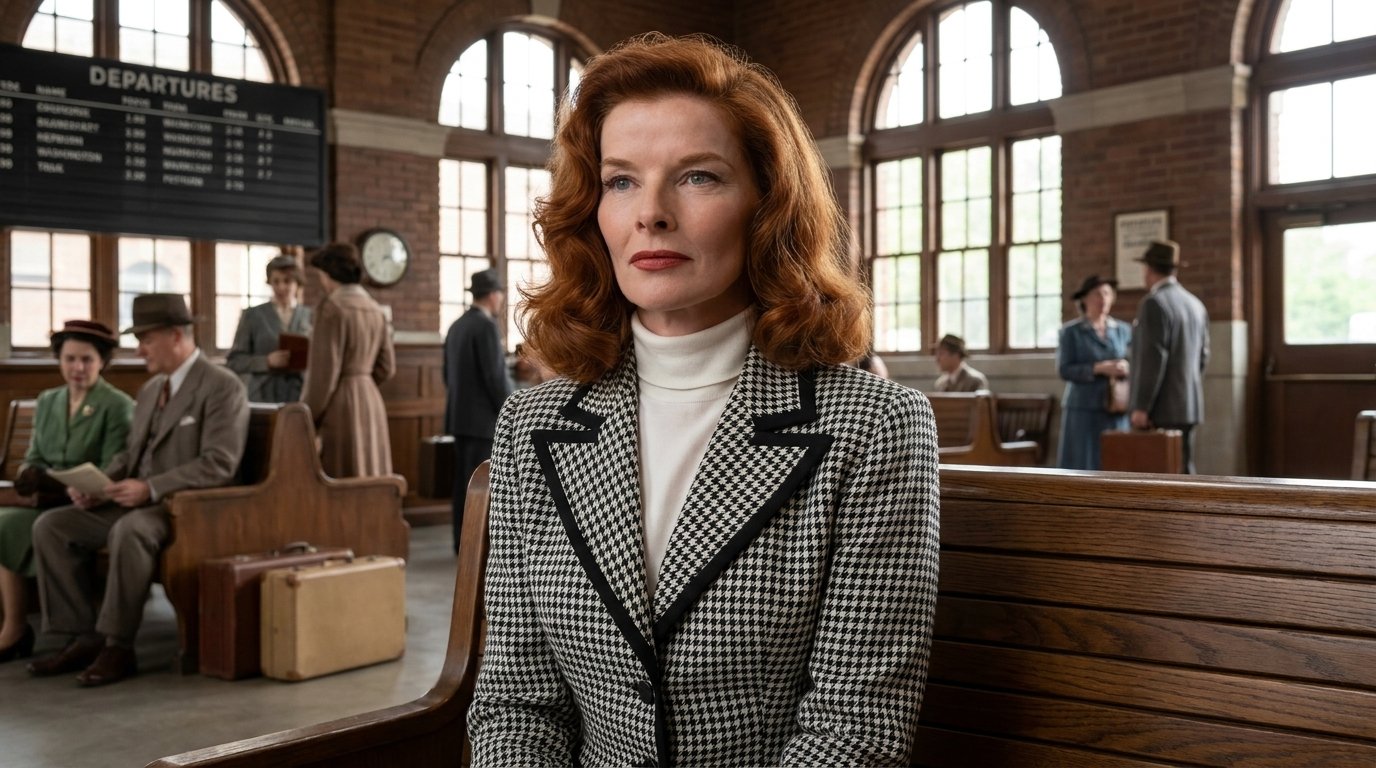
Katharine Hepburn is one of the most celebrated actresses in the history of American film, and her career stretched across more than six decades of movies, theater, and television. She won four Academy Awards for Best Actress, a record that still stands for lead performances, and she did so while openly refusing to follow the rules Hollywood expected of its female stars. This guide brings together her early life, her most important films, her long partnership with Spencer Tracy, her awards, and the reasons her influence continues to be felt today.
Quick Facts About Katharine Hepburn
- Full name: Katharine Houghton Hepburn
- Born: May 12, 1907, in Hartford, Connecticut, USA
- Died: June 29, 2003, in Old Saybrook, Connecticut, at the age of 96
- Profession: Actress on stage, screen, and television
- Education: Bryn Mawr College, graduating in 1928
- Academy Awards: 4 wins from 12 nominations, all for Best Actress
- Best-known films: Bringing Up Baby, The Philadelphia Story, Woman of the Year, The African Queen, Adam’s Rib, Guess Who’s Coming to Dinner, The Lion in Winter, On Golden Pond
- Autobiography: Me: Stories of My Life (1991)
Early Life and Family Background
Katharine Hepburn was born in Hartford, Connecticut, into a well-educated and progressive family. Her father, Thomas Norval Hepburn, was a respected urologist, and her mother, Katharine Martha Houghton Hepburn, was an active supporter of women’s right to vote and of access to birth control. Hepburn was one of six children, and she often said that her parents encouraged her to speak her mind, to stay physically active, and to think independently. Those habits shaped the confident public image that later made her famous.
Her childhood also included a painful loss. Her older brother Tom died in 1921 when he was fifteen, and the event deeply affected the family. Hepburn went on to attend Bryn Mawr College, a women’s college in Pennsylvania, where she studied history and philosophy and became involved in college theater. After graduating in 1928, she chose to pursue acting as a career, even though the profession was not considered a respectable path for a woman from her background.
Starting Out on Stage and Arriving in Hollywood
Hepburn made her Broadway debut in 1928 and spent several years working in theater, where she was sometimes fired or overlooked because her strong personality and distinctive voice did not suit every director. A major breakthrough came in 1932 with the stage play The Warrior’s Husband, which attracted the attention of film studios. She soon signed with RKO and made her screen debut in A Bill of Divorcement (1932), a film directed by George Cukor, who would go on to direct her many more times and remained one of her closest professional allies.
Her rise was remarkably fast. Only a year later, she won her first Academy Award for Best Actress for Morning Glory (1933), in which she played an ambitious young woman determined to become a star. Critics noticed that she brought an intensity and intelligence to her roles that audiences had not often seen from leading ladies at the time.

The “Box Office Poison” Label and a Famous Comeback
Hepburn’s early success was followed by a rough stretch in the late 1930s. In 1938, an independent theater owners’ group published a notice that listed her among actors considered poor draws at the box office, and she became widely associated with the unfair label “box office poison.” Several of her films from that period, including Bringing Up Baby (1938), a screwball comedy with Cary Grant, did not perform well on release even though many critics and viewers now rank it among the funniest American comedies ever made.
Instead of accepting the setback, Hepburn took control of her own career. She left RKO, secured the film rights to the play The Philadelphia Story with help from Howard Hughes, and starred in the Broadway version in 1939, where it became a major hit. She then arranged for MGM to make the movie with her in the lead role, alongside Cary Grant and James Stewart. The film, released in 1940, was a critical and commercial success, earned her another Oscar nomination, and turned her into a top star once again. The episode is often cited as one of the smartest career recoveries in Hollywood history.
Katharine Hepburn and Spencer Tracy
The most famous partnership of Hepburn’s life began in 1942 when she was paired with Spencer Tracy in Woman of the Year. The chemistry between the two was immediate, and they went on to make nine films together: Woman of the Year (1942), Keeper of the Flame (1942), Without Love (1945), The Sea of Grass (1947), State of the Union (1948), Adam’s Rib (1949), Pat and Mike (1952), Desk Set (1957), and Guess Who’s Coming to Dinner (1967).
Off screen, the two shared a private relationship that lasted about 27 years, until Tracy’s death in June 1967, only weeks after filming of their last movie was completed. Tracy was married and never divorced, so the relationship was kept out of the public eye, and Hepburn largely stepped back from work in the later 1960s to care for him as his health declined. Their films together are still admired for the way they portrayed men and women as equals who could argue, joke, and respect each other at the same time.
Katharine Hepburn’s Most Important Films
Hepburn appeared in dozens of movies, but a handful stand out for their quality and cultural influence.
Alice Adams (1935) earned her a second Oscar nomination and showed that she could handle quiet, emotional drama as well as comedy.
Bringing Up Baby (1938) is considered a classic of screwball comedy, built around her fast-talking heiress and Cary Grant’s flustered scientist.
The Philadelphia Story (1940) is a sophisticated romantic comedy that confirmed her return to stardom.
The African Queen (1951) paired her with Humphrey Bogart in an adventure story set in East Africa during World War I, directed by John Huston. It was shot largely on location in Africa under difficult conditions, and Bogart won the Best Actor Oscar for his role.
Adam’s Rib (1949) shows her and Tracy as married lawyers who face each other in court, and the film is still discussed for its lively treatment of gender and fairness.
Guess Who’s Coming to Dinner (1967) tackled interracial marriage in a mainstream American film and brought Hepburn her second Oscar.
The Lion in Winter (1968) featured her as Eleanor of Aquitaine opposite Peter O’Toole and delivered her third Oscar.
On Golden Pond (1981) gave her a role beside Henry Fonda and Jane Fonda and resulted in her fourth Oscar win.
Awards and Honors
Hepburn received twelve Academy Award nominations for acting, all in the Best Actress category, and won four times: for Morning Glory (1933), Guess Who’s Coming to Dinner (1967), The Lion in Winter (1968), and On Golden Pond (1981). The 1968 award was shared with Barbra Streisand for Funny Girl, which was one of the rare ties in Oscar history. Hepburn did not attend the ceremonies to collect any of her four awards, a habit that fit her reputation for valuing privacy over publicity.
Her other nominated performances were in Alice Adams, The Philadelphia Story, Woman of the Year, The African Queen, Summertime, The Rainmaker, Suddenly, Last Summer, and Long Day’s Journey into Night.
Beyond the Oscars, she received a Tony Award nomination for the Broadway musical Coco (1969), won an Emmy Award for the television film Love Among the Ruins (1975), and received the Kennedy Center Honors in 1990. In 1999, the American Film Institute ranked her first on its list of the greatest female screen legends of classic Hollywood cinema.
Style, Personality, and Independence
Hepburn became known for an energetic, direct manner and for her distinctive Mid-Atlantic voice, which listeners often describe as crisp and slightly trembling in her later years. She also became closely associated with wearing trousers at a time when many women in public life were expected to wear dresses and skirts, and that choice helped her develop an image of practical independence that many fans admired and imitated. Beyond fashion, she was famous for avoiding gossip columns and publicity events, for living on her own terms, and for speaking frankly in interviews.
She also kept returning to the stage throughout her career, appearing in productions such as As You Like It and The Millionairess as well as the musical Coco. This commitment to theater helped her stay creatively challenged and showed that her talent extended beyond the camera.
Later Years and Death
Hepburn kept working well into her eighties, taking on television films and smaller film roles that suited her energy and health. Her final acting work came in the mid-1990s, including the movie Love Affair (1994) and the television film One Christmas (1994). In 1991 she published her memoir Me: Stories of My Life, in which she looked back on her family, her career, and her working relationships.
She died on June 29, 2003, at her family home in Old Saybrook, Connecticut, at the age of 96. Tributes poured in from around the world, and many film fans remember her not only for her awards but for the way she changed what a leading woman on screen could be.
Why Katharine Hepburn Still Matters Today
Hepburn’s legacy rests on a rare combination of talent, longevity, and courage. She proved that an actress could be intelligent, outspoken, and athletic without losing audience affection, and she helped open the door for later performers who wanted stronger and more varied roles. Her films remain popular on streaming services and in classic film festivals, and her record of four lead acting Oscars has stood for decades. In 2010, the United States Postal Service also honored her with a commemorative postage stamp, which shows how widely her influence is recognized.
For anyone who wants to start exploring her work, a good path is to begin with Bringing Up Baby for comedy, The Philadelphia Story for romance, The African Queen for adventure, and On Golden Pond for emotional depth. Together, these films give a clear picture of why critics and audiences still place her among the greatest actresses of all time.
Frequently Asked Questions About Katharine Hepburn
How many Oscars did Katharine Hepburn win? She won four Academy Awards for Best Actress, which is the most wins by any performer in a lead acting category, and she received twelve nominations in total.
Was Katharine Hepburn related to Audrey Hepburn? No. Despite the shared surname and their similar fame, the two actresses were not related.
How many movies did Katharine Hepburn make with Spencer Tracy? They made nine films together between 1942 and 1967.
How old was Katharine Hepburn when she died? She was 96 years old when she died on June 29, 2003.
What was Katharine Hepburn’s first movie? Her first film was A Bill of Divorcement, released in 1932.
Did Katharine Hepburn ever remarry after her first marriage? She was married once, to Ludlow Ogden Smith, from 1928 until their divorce in 1934, and she did not marry again.
Disclaimer
This article is provided for general information and educational purposes only. It has been prepared from widely documented historical records about Katharine Hepburn, but dates, award counts, and other details can occasionally differ between sources or be updated over time. Readers who need exact information for academic, professional, or publishing use should confirm key facts with primary sources such as the Academy of Motion Picture Arts and Sciences, the American Film Institute, and major biographies. All film titles and names mentioned belong to their respective owners, and no affiliation with Katharine Hepburn’s estate is claimed.
EXPLORE MORE: Rashmika Mandanna: Biography, Age, Movies, Awards, Marriage and Upcoming Films (2026)


[…] EXPLORE MORE: Katharine Hepburn: Life, Career, Oscars, and Lasting Legacy […]